










Detox smoothies are one of the easiest ways to get more fruit, vegetables and fibre into your day, and that is where most of their weight-loss value comes from. No smoothie “flushes” fat or toxins on its own (your liver and kidneys already do that job), but a well-built smoothie can replace a less nutritious breakfast or snack, keep you full for longer and make a calorie deficit easier to stick to.
Below are the main types of detox smoothies, what each one is good for, a simple recipe for each, and how to use them for weight loss without the crash that comes with juice-only cleanses.

What makes a smoothie good for weight loss?
A smoothie helps with weight loss when it is filling for the calories it contains. In practice that means:
- Fibre from whole fruit, vegetables, oats, chia or flax seeds. Blending keeps the fibre (unlike juicing), which slows digestion and helps you stay full.
- Protein from Greek yoghurt, kefir, milk, soy milk, silken tofu or a protein powder. Protein is the most satiating nutrient and helps protect muscle while you lose weight.
- Mostly vegetables and low-sugar fruit, such as leafy greens, cucumber, berries and citrus, rather than large amounts of banana, mango, fruit juice or honey.
- A sensible portion: around 300 to 400 ml for a snack, or up to 500 ml if it is replacing a meal.
The UK’s NHS notes that smoothies count as a maximum of one of your 5 A Day portions, however much fruit you blend in, because blending releases the natural sugars (NHS). That is a good reason to treat smoothies as one part of a balanced diet rather than the whole plan.
The main types of detox smoothies
1. Green smoothies
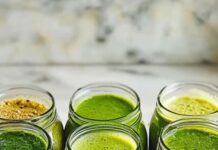
Green smoothies are built on leafy greens such as spinach or kale, plus a little fruit for sweetness. They are low in calories, high in fibre and a simple way to eat more vegetables. If you want a structured plan, see our 10-day green smoothie recipes for weight loss and our guide to what green detox smoothies contain.
Simple recipe: 1 large handful of spinach, ½ cucumber, ½ green apple, juice of ½ lemon, 1 tbsp chia seeds, 250 ml water or unsweetened almond milk.
2. Berry (red fruit) smoothies
Strawberries, blueberries, raspberries and blackberries are among the lowest-sugar fruits and are rich in vitamin C and polyphenols. Frozen berries are just as nutritious and make the smoothie thick without ice cream or extra sugar.
Simple recipe: 150 g mixed frozen berries, 150 g plain Greek yoghurt, 1 tbsp ground flaxseed, 150 ml milk of your choice.
3. Protein smoothies
Protein smoothies are the best type to use as a meal replacement, because protein keeps hunger down for longer. Aim for 20 to 30 g of protein in a meal-replacement smoothie. Our post on the benefits of detox protein shakes covers this in more detail.
Simple recipe: 1 scoop unflavoured or vanilla protein powder (or 150 g silken tofu), 1 small banana, 1 handful of spinach, 1 tbsp peanut butter, 250 ml milk.
4. Citrus and ginger smoothies
Orange, grapefruit, lemon and fresh ginger give a bright, refreshing smoothie that is easy to drink in the morning. Ginger can also help with mild nausea or bloating. Use whole peeled fruit rather than juice to keep the fibre.
Simple recipe: 1 peeled orange, ½ peeled grapefruit, 1 cm fresh ginger, 1 handful of kale, 150 ml water, a few ice cubes.
5. Tropical smoothies
Pineapple, mango and papaya taste great but are higher in natural sugar, so keep the portion small and balance it with greens, coconut water or yoghurt. Pineapple contains bromelain, an enzyme often linked to digestion; read more in our post on pineapple detox benefits.
Simple recipe: 80 g pineapple, 1 handful of spinach, 150 g Greek yoghurt, 150 ml coconut water.
6. Root vegetable smoothies
Beetroot and carrot add natural sweetness, colour and fibre with fewer calories than most fruit. Beetroot is also a source of nitrates, which support healthy blood flow.
Simple recipe: 1 small cooked beetroot, 1 carrot, ½ apple, juice of ½ lemon, 1 cm ginger, 200 ml water.
7. Anti-inflammatory smoothies
These combine ingredients such as turmeric, ginger, berries, leafy greens and omega-3 rich seeds. They are a good everyday option if you want to support overall health rather than just weight loss. See our anti-inflammatory smoothie recipes for more ideas.
How to use detox smoothies to lose weight
- Replace, don’t add. A smoothie only helps with weight loss if it replaces something, such as a pastry breakfast or an afternoon snack. Drinking smoothies on top of your usual meals adds calories.
- Use one smoothie a day, not three. Replacing one meal or snack is sustainable. Smoothie-only “cleanses” are very low in protein and often lead to hunger, low energy and rebound eating afterwards.
- Keep the rest of your meals balanced. Build lunch and dinner around vegetables, lean protein, whole grains and healthy fats, as recommended by the World Health Organization.
- Watch the extras. Honey, fruit juice, sweetened yoghurt and large amounts of nut butter can double the calories of a smoothie without making it more filling.
- Drink water, not just smoothies. Water is still the best everyday drink for hydration (Harvard T.H. Chan School of Public Health).
If you are deciding between juicing and blending, our comparison of juice cleanses vs smoothie detoxes for weight loss explains why smoothies usually come out ahead.
Do detox smoothies actually remove toxins?
Not in the way marketing often suggests. Your liver, kidneys, gut, lungs and skin remove waste products continuously, and there is little scientific evidence that special “detox” products or programmes improve on this (NCCIH). What smoothies can do is supply fibre, vitamins, minerals and plant compounds that support those organs as part of a healthy diet. Eating more vegetables and fruit is consistently linked with better health (Harvard Nutrition Source).
Who should be careful
- People with diabetes should watch fruit portions and pair fruit with protein and fibre to avoid blood sugar spikes.
- People with kidney disease may need to limit high-potassium ingredients such as banana, spinach and beetroot.
- People taking blood thinners such as warfarin should keep their intake of vitamin K-rich greens consistent and talk to their doctor before big changes.
- Anyone who is pregnant, breastfeeding or has a history of disordered eating should avoid restrictive cleanses.
Frequently asked questions
Can I lose weight drinking only smoothies?
You may lose weight in the short term because calories drop, but much of it is water and the plan is hard to sustain. Replacing one meal a day with a high-protein, high-fibre smoothie is a more realistic approach.
What is the best time to drink a detox smoothie?
Breakfast is the most popular time because a smoothie is quick to make and easy to take with you. A smaller smoothie also works well as an afternoon snack to prevent overeating at dinner.
Are green smoothies better than fruit smoothies for weight loss?
Generally yes, because leafy greens add volume and fibre for very few calories. A mix of greens with a small amount of fruit gives the best balance of taste and nutrition.
This article is for general information and is not a substitute for medical advice. Talk to a doctor or registered dietitian before starting any detox or weight-loss plan, especially if you have a health condition.