


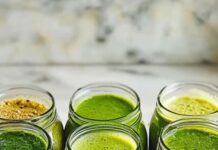










A detox kit is a packaged set of products sold as a complete cleanse, usually lasting 3 to 30 days. Kits vary a lot in what they contain, and the price rarely reflects how useful they are. This guide explains what is typically inside a detox kit, what each part does, the risks, and how to build a simple, cheaper food-based “kit” yourself.
What a detox kit usually contains
- Herbal teas, often with senna (a laxative) or dandelion (a diuretic)
- Capsules or tablets with herbs such as milk thistle, artichoke, cascara or psyllium
- Fibre powders such as psyllium husk or inulin
- Shakes or powders for meal replacement or “greens” blends
- Probiotics
- A guide or meal plan, sometimes with a list of foods to avoid
What each part actually does
| Component | Main effect | Worth it? |
|---|---|---|
| Laxative teas or capsules | More frequent bowel movements, water loss | Not for regular use; can cause cramps and dehydration |
| Diuretic herbs | More urination, temporary water-weight loss | Little lasting benefit |
| Fibre powder | Supports regularity and fullness | Can help; food fibre works too |
| Probiotics | May support gut health in some people | Depends on strain; fermented foods are an alternative |
| Meal plan | Encourages healthier eating | Often the most useful part |
Do detox kits remove toxins?
There is little evidence that detox kits remove toxins or improve health beyond what a balanced diet already does (NCCIH). Any improvement people feel usually comes from the healthier eating, extra water and reduced alcohol that the kit’s plan encourages.
Risks to be aware of
- Cramping, diarrhoea and dehydration from laxatives
- Interactions with medication, including reduced effectiveness of the contraceptive pill if diarrhoea occurs
- Rare liver injury linked to some herbal supplements
- Products bought from unreliable sellers may contain undeclared ingredients
Pregnant or breastfeeding women, under-18s, people with digestive, kidney, liver or heart conditions, and anyone taking regular medication should avoid detox kits unless advised by a doctor.
Build your own food-based detox “kit”
You can get the useful parts of a detox kit from your supermarket:
- Herbal teas without laxatives: ginger, peppermint, green tea, rooibos (see herbal teas for liver health)
- Fibre: oats, chia seeds, ground flaxseed, beans and lentils
- Probiotics: yoghurt, kefir, sauerkraut or kimchi
- Greens: spinach, kale and broccoli for smoothies and meals
- Hydration: a reusable water bottle and lemons for lemon water
- A plan: follow our simple 7-day detox plan
If you still want to buy a kit
- Choose kits without stimulant laxatives such as senna or cascara.
- Check every ingredient with a pharmacist if you take medication.
- Buy from a reputable pharmacy or retailer.
- Keep eating balanced meals with protein during the kit.
- Stop if you experience pain, ongoing diarrhoea, dizziness or other side effects.
Frequently asked questions
Which detox kit is best?
The best option for most people is a food-based plan rather than a supplement kit. If you buy one, choose the simplest kit with no laxatives.
How long does a detox kit last?
Most run for 7 to 14 days. Laxative-based kits should not be used for longer than the label recommends.
This article is for general information and is not a substitute for medical advice.